Sydney Opera House History, Architecture & Visitor Guide
The Sydney Opera House is one of the most famous architectural landmarks in the world and a defining symbol of modern Australia. Located in the vibrant city of Sydney, this iconic building attracts millions of visitors every year who come to admire its distinctive design, attend performances, and explore its cultural significance. Standing proudly on Bennelong Point and overlooking the beautiful waters of Sydney Harbour, the Sydney Opera House represents the artistic and cultural spirit of Australia. With its unique sail-shaped design and remarkable engineering, it has become one of the most recognizable buildings in the world. Today, the Opera House is not only a performance venue but also a major tourist destination, hosting concerts, opera, theatre performances, festivals, and cultural events throughout the year.
History of the Sydney Opera House
The idea of building a world-class performing arts center in Sydney first emerged in the late 1940s. At that time, the city lacked a dedicated venue large enough to host major opera and orchestral performances. The government of New South Wales decided to create a cultural landmark that would elevate Sydney’s global reputation. In 1956, an international design competition was announced, attracting architects from around the world. More than 200 designs were submitted, but the winning design came from Danish architect Jørn Utzon. His visionary concept featured a series of white shell-like structures rising above the harbor, inspired by sails of ships and natural forms. Construction began in 1959 and was one of the most ambitious architectural projects of the time. However, the project faced numerous technical challenges, budget increases, and political disagreements. These difficulties eventually led to Utzon leaving the project in 1966 before its completion. Despite these setbacks, construction continued, and the Sydney Opera House was finally completed in 1973. The building was officially opened by Elizabeth II on October 20, 1973. Since then, the Sydney Opera House has become one of the most celebrated cultural landmarks in the world.
Architectural Design and Structure
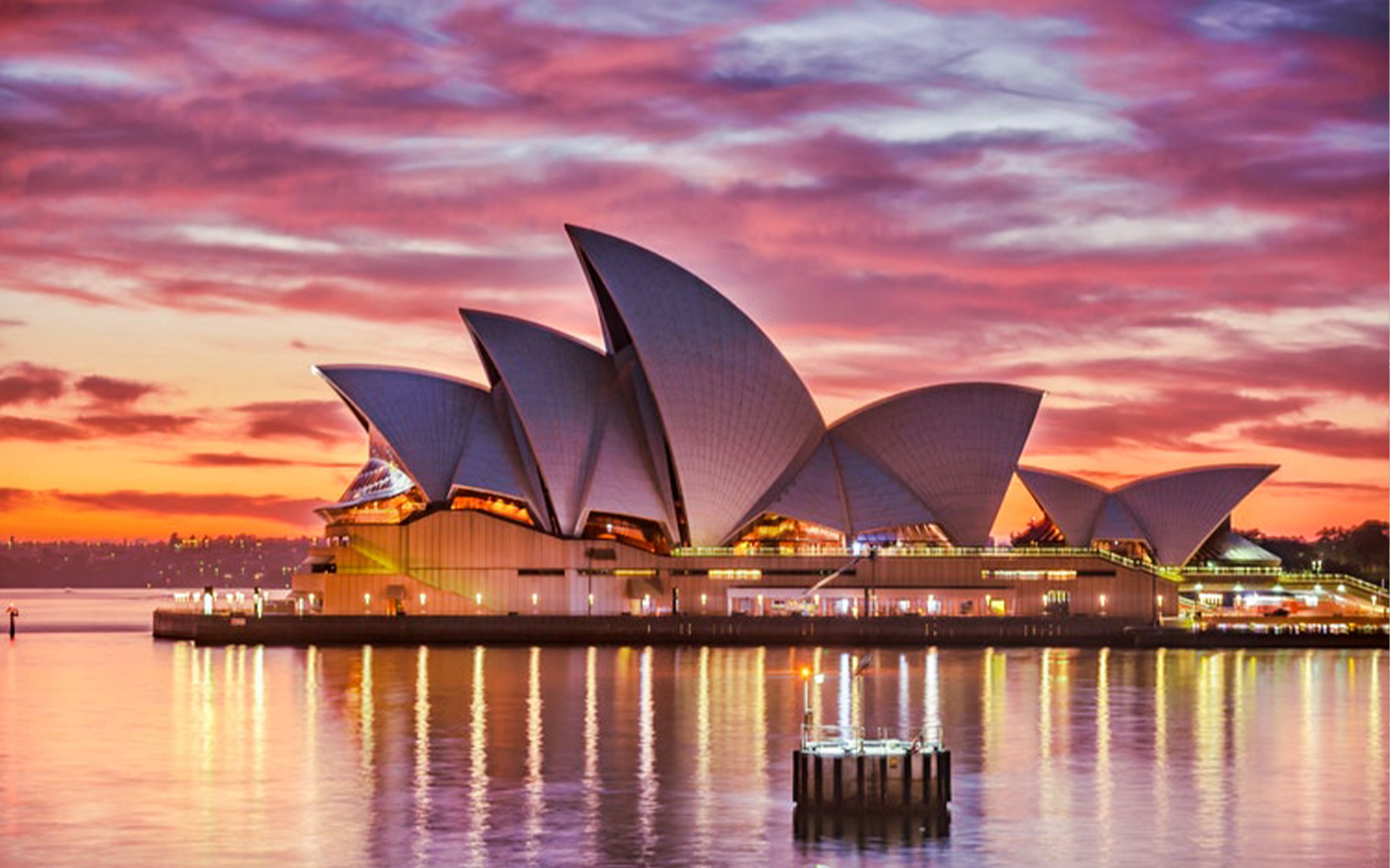
The most distinctive feature of the Sydney Opera House is its extraordinary roof structure. The building’s famous shell-like shapes resemble sails floating above the harbor, creating a dramatic and futuristic appearance. Architect Jørn Utzon designed the structure using a series of interlocking concrete shells that form the building’s roof. These shells are covered with more than one million ceramic tiles that give the building its bright white appearance. The Opera House sits on a large platform overlooking the harbor, making it visible from many points around Sydney. Its location on Bennelong Point was carefully chosen to highlight the building against the backdrop of the harbor and the city skyline.
Inside the Opera House, there are multiple performance venues, including concert halls, theaters, rehearsal rooms, restaurants, and exhibition spaces. The building’s design successfully combines artistic creativity with advanced engineering, making it one of the greatest architectural achievements of the 20th century. Because of its exceptional design and cultural importance, the Sydney Opera House was added to the list of UNESCO World Heritage Sites in 2007.
Cultural Importance of the Sydney Opera House
Beyond its architectural beauty, the Sydney Opera House plays a vital role in Australia’s cultural life. It hosts more than a thousand performances every year, ranging from opera and ballet to contemporary music, theater, and international performances. Several major organizations regularly perform at the venue, including the Sydney Symphony Orchestra and Opera Australia. These performances attract both local audiences and international visitors. The Opera House also serves as a platform for cultural exchange and artistic expression. Artists from around the world perform here, making it one of the most important performing arts centers globally. In addition to performances, the Opera House hosts festivals, exhibitions, film screenings, and educational programs. One of the most popular events held nearby is Vivid Sydney, during which the building becomes a canvas for spectacular light projections and digital art displays. Through these activities, the Opera House continues to inspire creativity and connect people through the arts.
Visiting the Sydney Opera House
For travelers visiting Sydney, the Opera House is often the first place on their itinerary. Its stunning waterfront location and iconic architecture make it one of the most photographed landmarks in Australia. Visitors can explore the Opera House in several ways. Guided tours are available throughout the day and provide insights into the building’s history, design, and cultural significance. During these tours, visitors can walk through the interior spaces and learn about the fascinating story behind its construction. The surrounding area is equally enjoyable. Just steps away is Circular Quay, a lively waterfront district filled with restaurants, cafés, and ferry terminals. Nearby attractions such as the Sydney Harbour Bridge and the Royal Botanic Garden Sydney make the area perfect for sightseeing and relaxation. Visitors can also enjoy dining experiences at restaurants within the Opera House complex while taking in breathtaking views of Sydney Harbour.
Best Time to Visit
The Sydney Opera House can be visited throughout the year, but certain times provide a more memorable experience. Early morning and sunset are especially popular times because the lighting highlights the building’s unique architectural forms. Evenings are also magical when the building is illuminated and performances are underway. During special events such as Vivid Sydney, the Opera House becomes the centerpiece of colorful light displays, attracting thousands of spectators. Tourists are encouraged to book guided tours or performance tickets in advance, especially during peak travel seasons.
Interesting Facts About the Sydney Opera House
The Sydney Opera House is filled with fascinating facts that highlight its uniqueness and importance. The building took more than a decade to complete and involved thousands of workers, engineers, and designers. Its roof contains over one million tiles arranged in a precise geometric pattern. The building also hosts more than 1,500 performances every year, making it one of the busiest performing arts centers in the world. Another interesting fact is that the Opera House was one of the first buildings of its kind to use advanced computer technology during construction to solve complex structural problems. Today, the Opera House remains a masterpiece of modern architecture and a symbol of creativity and innovation.
Conclusion
The Sydney Opera House is much more than a famous landmark. It represents artistic vision, architectural innovation, and cultural pride. From its dramatic design overlooking Sydney Harbour to its role as a global performing arts venue, the Opera House continues to inspire millions of people around the world. Whether someone visits Sydney for the first time or has lived there for years, the Sydney Opera House remains an unforgettable experience. Its history, architecture, and cultural impact make it one of the most extraordinary buildings ever created. For anyone exploring Australia, visiting the Sydney Opera House is truly a must-see experience.